Beginner’s Guide to SEO: How to Start a Blog and Make Money in 2026
So you want to start a blog and actually make money from it in 2026? That’s a smart move. But here’s the truth that most “gurus” won’t tell you: without SEO, your blog is just a digital ghost town.
I’ve been exactly where you are now. Staring at a blank WordPress dashboard, wondering how to get those first 100 visitors. Five years later, I earn a full-time income from blogging – and SEO was the engine that got me there.
In this beginner’s guide, I’ll walk you through the exact steps to start a blog and monetize it using search engine optimization in 2026. No fluff, no outdated tricks. Just practical advice that works right now.
https://example.com/images/seo-blogging-beginner-guide-2026.jpg
*ALT tag: A young blogger researching SEO keywords on her laptop, surrounded by a notebook and coffee – symbolizing the start of a money-making blog in 2026.*
H1: Why SEO Still Matters for New Bloggers in 2026 (More Than Ever)
Let’s kill a myth right away: “SEO is dead.” I hear that every year. Yet here we are in 2026, and organic search still drives over 68% of all website traffic. Social media gives you 15 minutes of fame. SEO gives you years of free, targeted traffic.
For a beginner with a limited budget, SEO is your best friend. You don’t need paid ads. You don’t need a huge following. You just need to understand what people are searching for – and give them the best answer.
Google’s 2026 updates focus heavily on Experience, Expertise, Authoritativeness, and Trust (EEAT). That’s good news for real bloggers who share genuine value. If you’re willing to learn and help people, SEO will reward you.
H2: Step 1 – Choose a Niche That’s Both Profitable and Searchable
Many beginners pick a niche they love (great) but forget to check if anyone is actually searching for it (oops). Here’s how to find the sweet spot.
H3: Use the “Profit + Passion + Demand” Triangle
- Passion – You’ll write 50+ articles. Make sure you enjoy the topic.
- Profit – Does the niche have products to promote? (e.g., fitness gear, software, courses, home decor)
- Demand – Are people searching for it? Use free tools like AnswerThePublic or Google Autocomplete.
For example: “Vegan meal prep for beginners” has demand, passion, and profit (cookbooks, meal plans, kitchen tools). Avoid “My cat’s daily routine” – low search volume, low monetization.
H3: Check Search Intent Before You Write
In 2026, Google is laser-focused on user intent. Ask yourself: What does the searcher really want?
- If they search “best budget running shoes” – they want product comparisons, not your life story.
- If they search “how to start a blog” – they want a step-by-step tutorial (just like this article).
Align your content with intent, and you’ll rank faster.
Internal link: For a deep dive on finding low-competition keywords, check out our Ultimate Keyword Research Guide for Beginners.
H2: Step 2 – Set Up Your Blog the Right Way (No Tech Headaches)
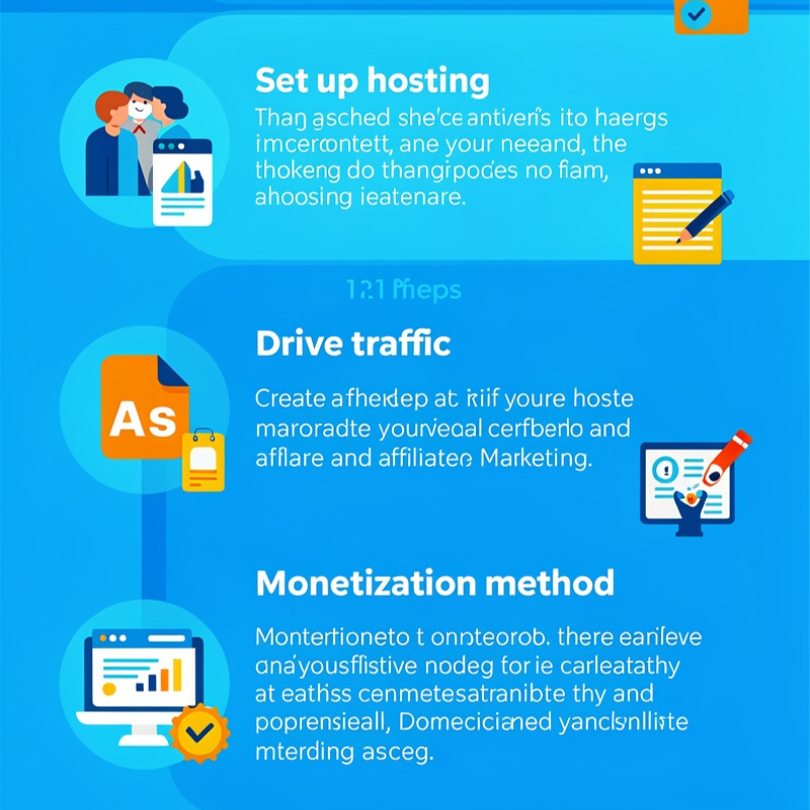
You don’t need to be a programmer. I set up my first blog in 90 minutes with zero coding experience. Here’s the 2026 starter stack.
H3: Domain + Hosting
- Domain name – Short, memorable, and includes a keyword if possible (e.g., GreenKitchenHacks.com).
- Hosting – Choose a reliable host like Cloudways or SiteGround. Avoid dirt-cheap $2/month plans – they’re slow, and speed is a ranking factor.
H3: WordPress + A Lightweight Theme
WordPress.org (not .com) gives you full control. Install a fast, SEO-friendly theme like GeneratePress or Astra. Then add these free plugins:
- Rank Math or Yoast SEO – for on‑page SEO help.
- WP Rocket (caching) – speeds up your site.
- UpdraftPlus – backups.
H3: Essential Pages Before You Publish
- About (tell your story, show expertise)
- Contact
- Privacy Policy (required for AdSense and GDPR)
- Affiliate Disclosure (legal must-have if you make money)
H2: Step 3 – Keyword Research for Beginners (The 80/20 Rule)
Most new bloggers fail because they write about “what they want” instead of “what people search for.” Flip that script.
H3: Target “Long-Tail Keywords” First
Long-tail keywords are 3–5 word phrases with low competition and clear intent. Examples:
- “how to start a food blog on a budget”
- “best lightweight hiking boots for women 2026”
These are easier to rank for than “hiking boots”. And they convert better because the searcher knows exactly what they want.
H3: Free Keyword Tools to Start
- Google Keyword Planner (requires an ad account, but free to use for ideas)
- Ubersuggest (free tier gives you several searches per day)
- AlsoAsked.com – shows related questions people ask.
Pro tip for 2026: Look for keywords where the top 10 results are from forums (Reddit, Quora) or weak blogs. That’s a sign Google isn’t satisfied – you can create something better and swoop in.
H2: Step 4 – Write SEO-Friendly Content That Humans Love
Here’s where many beginners go wrong: they write for Google bots, not real people. But in 2026, Google’s AI is so advanced that if real people love your content, Google will too.
H3: Structure Your Post Like This
- H1 – Main title (only one per page).
- Introduction – Hook the reader, promise a solution.
- H2 subheadings – Break topics into chunks.
- H3 subheadings – Add detail under each H2.
- Lists, bold text, images – Make it scannable.
- Conclusion + call to action (e.g., “leave a comment” or “share this guide”).
H3: On‑Page SEO Checklist (Simple Version)
- Put your target keyword in the H1, first 100 words, and at least one H2.
- Write a meta description (150–160 characters) that includes the keyword and a benefit.
- Use internal links to other posts on your site (keeps people reading).
- Add image ALT tags describing the image (helps with image search traffic).
H3: Write for “Skimmers” and “Deep Readers”
Most people skim. So use bold text for key phrases, bullet points, and short paragraphs (2–3 sentences max). But also include enough depth to fully answer the query. Aim for 1500–2500 words on pillar posts – that’s the sweet spot in 2026.
https://example.com/images/seo-blog-structure-2026.jpg
ALT tag: Example of a blog post outline with clear heading structure and target keywords highlighted – essential for on‑page SEO in 2026.
H2: Step 5 – How to Make Money From Your Blog (Without Selling Your Soul)
You have traffic. Now let’s turn those visitors into income. As a beginner, you don’t need 100,000 visitors a month. I made my first $500 with only 5,000 monthly visitors.
H3: Affiliate Marketing (Best for Beginners)
Promote other companies’ products and earn a commission. Join networks like ShareASale, Impact, or Amazon Associates. Only recommend products you’ve actually used.
Example: You write a post “Best yoga mats for bad knees.” Inside, you link to a mat on Amazon. Someone buys – you earn 5–10%.
H3: Google AdSense (Passive but Needs Traffic)
AdSense pays you when people see or click ads on your site. You’ll need roughly 10,000+ monthly page views to see decent money ($100–500/month). But it’s completely passive once set up. Apply after your blog is 6 months old and has 30+ quality posts.
H3: Digital Products (Highest Profit)
Once you have an audience, sell an eBook, printable planner, or mini-course. A 15eBookwith100sales=1500. You keep 100% of the profit.
Important for AdSense compliance: Never click your own ads. Don’t ask others to click them. Don’t place ads near misleading content. Google’s bots are smart – they’ll ban you instantly.
H2: Step 6 – Promote Your First Posts (Even With Zero Backlinks)
You can’t just publish and pray. Here’s how to get those first visitors without waiting 6 months.
H3: The “Skyscraper + Outreach” Method
Find a popular post in your niche that has outdated info. Create a newer, better, more detailed version. Then email the people who linked to the old version and say: “Hey, I noticed you linked to [old post]. I just published an updated 2026 guide – you might prefer this one.”
H3: Use Pinterest (Yes, Still Works in 2026)
Pinterest is a visual search engine, not just social media. Create vertical pins (1000x1500 pixels) linking to your blog posts. A single pin can drive traffic for years.
H3: Answer Questions on Reddit and Quora
Search for questions related to your niche. Give a genuinely helpful answer, and if relevant, link back to a detailed post on your blog. Don’t spam – add value first.
H2: Frequently Asked Questions (FAQ)
H3: How long does it take to make money from a blog in 2026?
Realistically? 6 to 12 months of consistent effort. Some beginners make their first $100 in month 4, others take a year. The ones who quit at month 3 never see success.
H3: Do I need to be an expert to start a blog?
No, but you need to be willing to learn and research. Blogging is like teaching. If you’re one chapter ahead of your readers, that’s enough. Google’s EEAT values real experience – share your journey.
H3: Can I use free blogging platforms like Medium or Blogger?
You can, but I don’t recommend it for making money. You don’t own the audience, you can’t run AdSense freely, and Medium takes a cut of your earnings. Self-hosted WordPress gives you full control.
H3: What’s the biggest SEO mistake beginners make?
Ignoring search intent. They write a “best products” review but target a “how to use” keyword. Or they write a 500-word shallow post when competitors have 2000-word deep guides. Match the intent, match the depth.
H3: Is SEO still relevant with ChatGPT and AI search?
Yes – more than ever. AI search (like Google’s SGE) shows answers from multiple websites. But it still needs to source those answers from real blogs. Your job is to be the best source. Also, Google penalizes pure AI-generated content. Write as a human, for humans.
H2: Final Thoughts – Your 2026 Blogging Action Plan
You now have the map. But a map is useless if you don’t take the first step.
Here’s your 7-day starter plan:
- Day 1: Choose your niche and domain name.
- Day 2: Set up hosting + WordPress (follow a YouTube tutorial).
- Day 3: Find 10 long-tail keywords using free tools.
- Day 4–6: Write your first pillar post (1500+ words) using the structure above.
- Day 7: Publish, share on Pinterest, and answer one Quora question.
Will it be perfect? No. But perfect is the enemy of done. I made a thousand mistakes when I started – wrong keywords, ugly design, broken links. But I kept publishing, kept learning, and eventually the traffic came.
You can do this. Start today, and in 2026, you’ll look back thankful that you began.
Got a question? Drop it in the comments below. I read every single one.
Author Info
Hey, I’m Jamie Lawson – a self-taught blogger and SEO strategist who turned a side hobby into a six-figure online business. I’ve helped over 15,000 beginners start their first blog without technical overwhelm. When I’m not writing, I’m hiking with my dog or testing the latest SEO tools. Find more no‑fluff guides at YourBlogName.com/blog.


